Nugget Watch is hands down the dumbest project I have ever worked on.
It started around January 2019 when my eldest younger sister decided it would be funny to send me constant chicken nugget price updates. I thought it would be funny to document that information. By the end of the year I had a live website, a database of chicken nugget prices, and a growing collection of reviews.
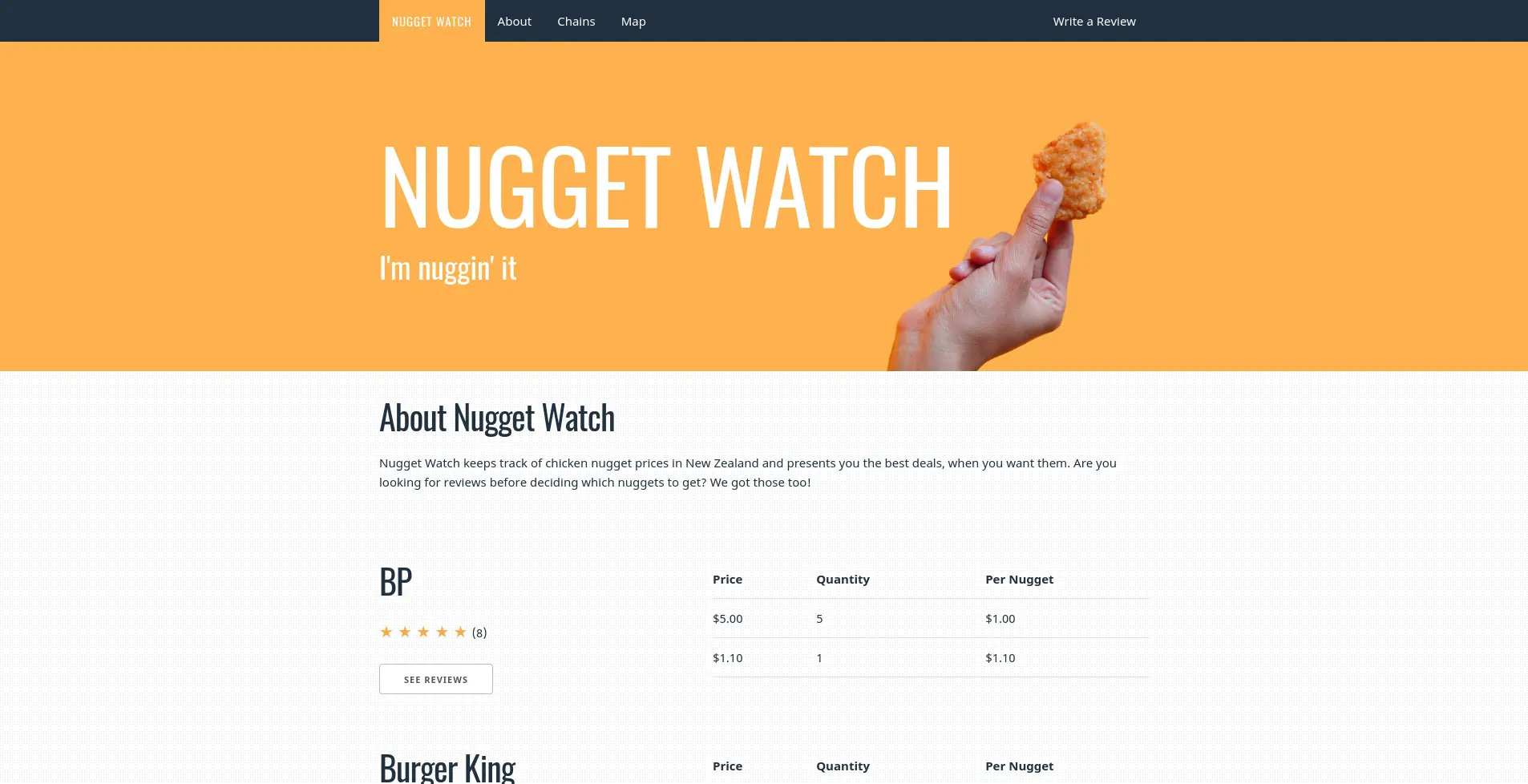 The original nugget watch design. The orange background was part of a royalty-fee stock image. It was easier to leave it than change it.
Then it spiralled. I launched a phone number, 0800 NUGGET, that would ask for your postcode and tell you where the highest rated and cheapest nuggets were nearby. I started a Patreon. I made bamboo cutlery with a branding iron and mailed out framed “Nuggeteer” certificates to supporters. It eventually turned into an OUSA affiliated club after our first AGM. I ended up on the radio.
It was a fun project and a fun year. But by the end, the joke became how much effort I put in, not how well executed Nugget Watch was. The punchline took too much effort to maintain.
I rewrote the joke
In 2026, a solid 6 years later, I rebuilt the website in Go, The PHP and Phalcon version had rotted past the point of repair after a few framework updates. At least the rebuild was quick. I’d already salvaged the data, so I could focus on what I think the project should have been the first time.
The new version is self-serious. Everything, from the new copy on the About and Methodology pages to store and user profiles, now presents as if it’s serious work. The old design looked like a computer scientist’s first website… it pretty much was. The new design leans into a 2000s data-dense aesthetic, complete with a hit counter.
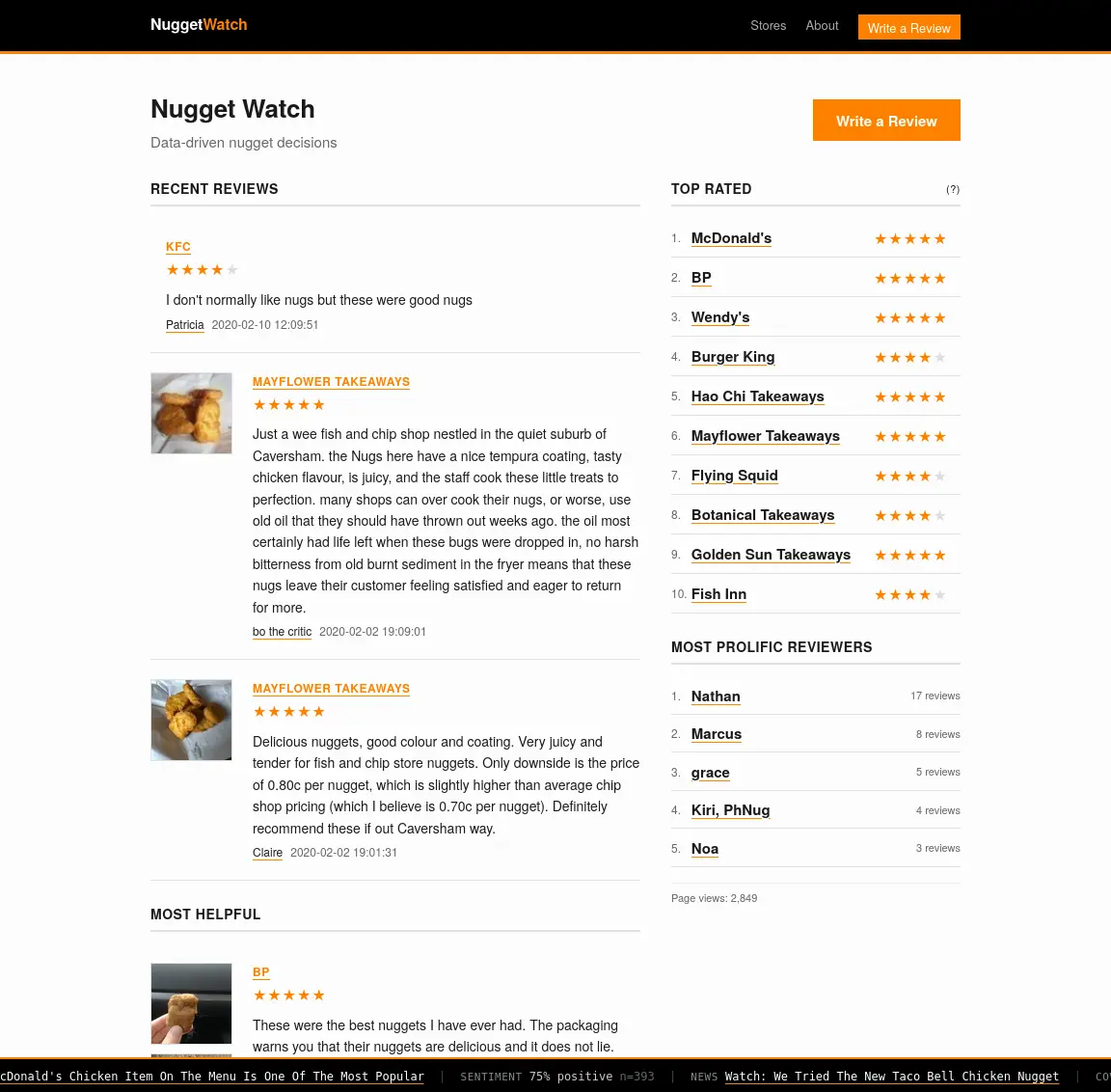 The new Nugget Watch design leans into a self-serious and data-heavy approach, inspired by 2000s design.
Statistical rigor
Nugget Watch is now statistically grounded. It was before, but now it’s obvious.
Review are ranked by the lower bound of the Wilson score confidence interval at 95%. The most divisive chicken nuggets are identified by looking up the highest standard deviation across reviews. There’s a methodology page that explains all of it and links to the derivations.
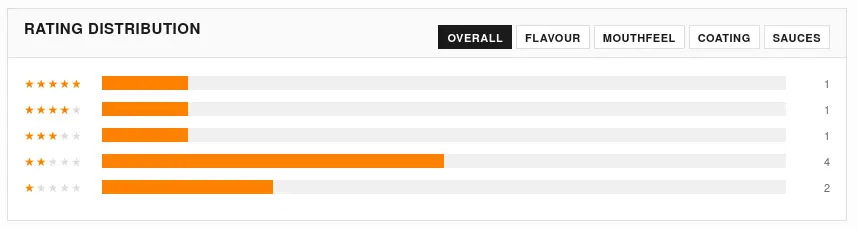 Was it necessary? Nope. Is it funny? Yep! It’s a punchline that get funnier over time. As (read: “if”) reviews get added, the statistical rankings become more specific. And importantly, it happens without any more input from me.
Social features
The biggest change was linking reviews together.
Before, when you submitted a review it just sat on the store’s page. Now, reviews are linked by email address. Click a reviewer’s name and you see see their other reviews, how they rate compared to everyone else, and badges that appear and they post more.
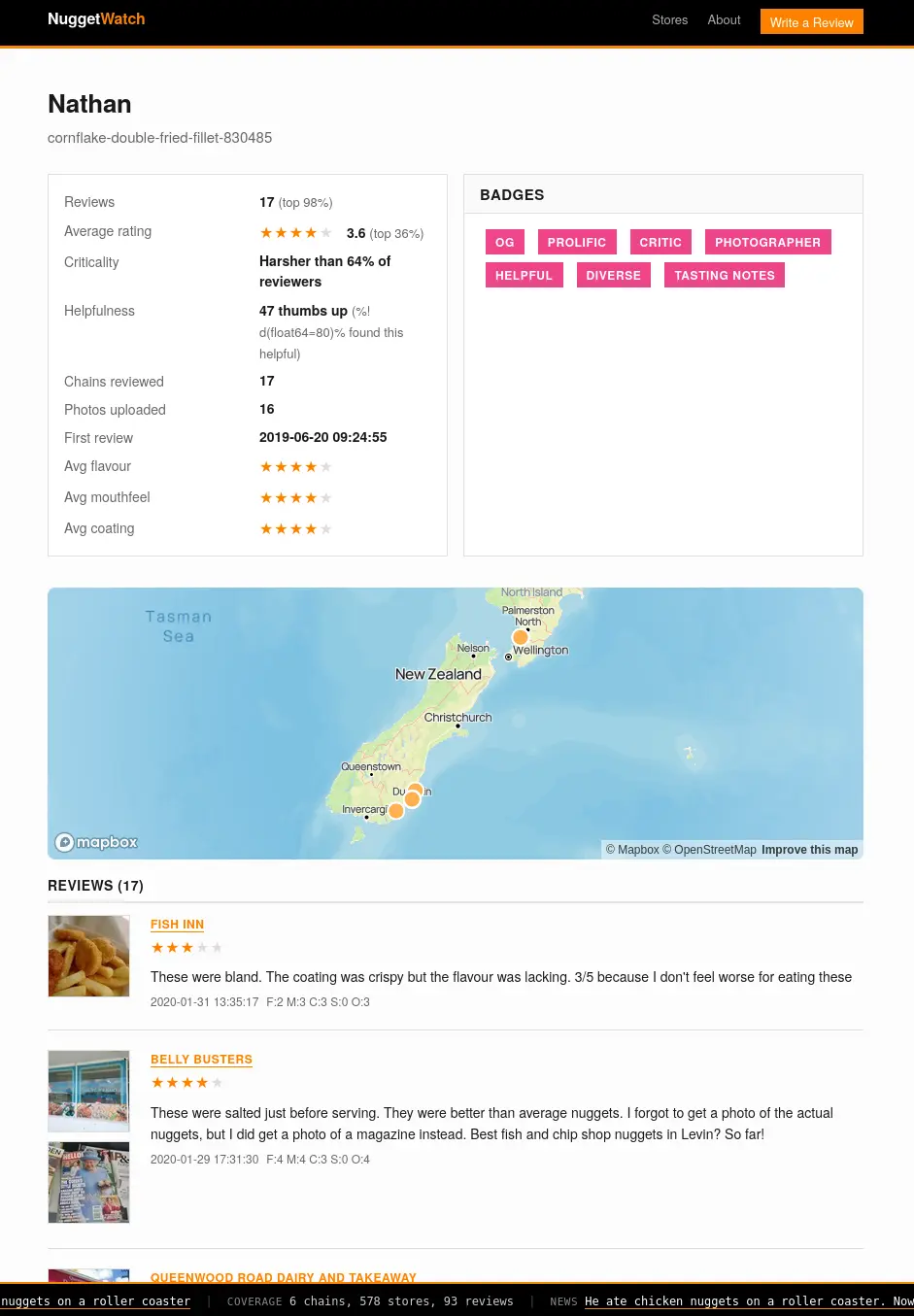
The homepage now also shows the most recent and most useful reviews (also computed using a 95% confidence interval).
This reframes what Nugget Watch is: not a price tracker (I dropped the price tracking), not a map (it’s still there but less visible), but a social platform for people to sincerely rate and review chicken nuggets. It’s a review website for the smallest sliver of human experience: eating chicken nuggets.
Nugget Watch is finished. Seven years later and the dumbest project I have ever worked on is now what it should have been.